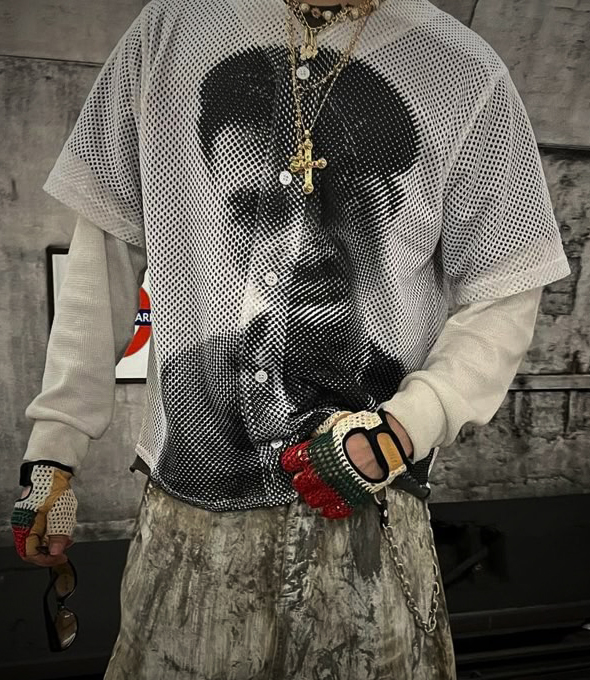
Why Do Rhinestones, Patches, and Embroidery Break Down After Wash Testing in Streetwear Clothing Production?
Some of the loudest pieces in a streetwear collection can die in the quietest moment: the first wash test. A hoodie can look sharp on the rack, the patch can sit clean in sample photos, the rhinestones can hit exactly right under flash, and the embroidery can feel expensive in hand. Then the garment gets washed, dried, handled, and checked again. That is when the weak points stop hiding.
A lot of brand teams run into this when they move beyond flat graphics and basic fleece. The minute a collection starts leaning harder into appliqué varsity details, rhinestone-heavy graphics, dense embroidery, mixed trims, or washed surfaces, the product stops being “just clothing.” It becomes a test of whether the factory really understands decorated streetwear as a product category, not just as a sewing task.
That distinction matters more now because the broader fashion market is under pressure to deliver stronger product value, clearer differentiation, and sharper execution. At the same time, streetwear remains a large category, with Mordor Intelligence estimating the market at USD 218.3 billion in 2026, while clothing still holds the biggest share inside the segment. That means brands still have room to win, but weak product execution gets exposed fast.
Trend direction is also pushing decoration into a more important role. Recent streetwear coverage has pointed to a stronger focus on trims, patches, hardware, layered graphics, and product detail as part of how brands build identity beyond logo placement alone. So when rhinestones, patches, or embroidery break down after wash testing, the issue is usually bigger than one damaged garment. It often signals that the product development system behind the garment was never fully locked in.
Why do embellished streetwear pieces fail after wash testing even when the sample looked right?
They usually fail because the visual sample and the production logic were never fully aligned. In decorated streetwear, a piece can look right before washing but still carry hidden weaknesses in adhesion, stitch density, base fabric behavior, reinforcement, or application order. Wash testing exposes the parts of the garment that styling alone cannot hide.
This is one of the biggest misunderstandings in embellished apparel. A sample can look strong because it was handled slowly, made by a more experienced operator, or built from a cleaner fabric lot. None of that guarantees the decoration will stay stable once the garment is washed, rubbed, flexed, and checked again. Wash testing is where the product stops being a showroom piece and starts acting like real clothing.
That is especially true in streetwear, where decoration often sits on heavyweight fleece, brushed cotton, mesh, denim, or washed jersey. Those fabrics move. They shrink, relax, twist, soften, or harden depending on the finish. If the decoration method was chosen without respecting that movement, the garment can lose impact fast. A rhinestone layout may start lifting at the edge. An embroidered area may pucker because the stitch density was too aggressive for the fabric. A patch may hold in one section and curl in another because the reinforcement underneath was too weak.
Fabrikn makes this point clearly when discussing embellished apparel production:
“Embellished garments require specialized machinery, skilled labor, careful material handling, advanced quality control, and the ability to manage added complexity at every stage of production.”
That is why decorated streetwear should never be treated like a simple add-on. The decoration is not sitting on top of the garment as a separate idea. It is interacting with the garment’s weight, stretch, finish, and use cycle from day one.
What does wash testing actually reveal in decorated streetwear clothing?
Wash testing reveals whether the decoration belongs to the garment or is only sitting on the garment. It shows how color, stitching, adhesion, shrink response, surface abrasion, and trim behavior hold up once the product goes through the kind of handling that real customers, retail teams, and content creators will put it through.
This is where a lot of weak development gets exposed. SDL Atlas notes that wash testing may look at color loss, pilling or fuzzing, cross staining, creasing, and how trims or embellishments performed after laundering. That is a useful reminder because brands sometimes talk about wash testing as if it were one simple pass-or-fail step. It is not. It is closer to a reality check across the whole garment surface.
In streetwear, that reality check gets tougher because decoration is often layered into already aggressive product treatments. A faded hoodie may already be carrying shrink movement from washing. A cracked or distressed graphic may already be introducing surface tension. A football-inspired jersey with patches may already have panel seams, mesh behavior, and contrast materials in play. Once a garment starts carrying multiple variables, wash testing becomes less about laundry and more about structural truth.
This matters because the strongest decorated pieces are not just visually loud. They still have to move like clothing. If the body starts fighting the trim, the product loses the relaxed authority that good streetwear is supposed to carry.
Which factory mistakes usually cause rhinestones, patches, and embroidery to break down?
The biggest factory mistakes usually come from treating embellishment as decoration-only work instead of garment-system work. Most failures trace back to poor fabric matching, weak reinforcement, sloppy process order, unstable heat settings, or decoration teams that are technically able to apply trims but not fully able to build streetwear products around them.
Rhinestones usually fail when application is rushed or the fabric underneath was never meant to carry that kind of heat-set load. The issue is not only whether the stones are attached. It is whether they are attached to a surface that stays stable after wash, handling, and wear. A fleece face that opens up too much after finishing can weaken edge hold. A jersey body with too much movement can turn a clean layout into a broken graphic after just a few cycles.
Patches and appliqué often fail because the factory underestimates how much layering changes the behavior of the garment panel. A patch that looks clean on a flat sample can start dragging the body once the piece is washed and worn. If the edge finish is not right, the patch can curl. If the reinforcement is too soft, the area may ripple. If the application order is wrong, later finishing can damage what looked sharp earlier in development.
Embroidery fails for a different reason. It looks permanent, so people assume it is safe. But embroidery can distort a garment just as easily as weak adhesive can. Fabrikn points out that brands should look closely at stitch precision, alignment, thread tension, and the reverse side of embroidery, because loose threads, puckering, and uneven edges are early warning signs of weak process control. In other words, embroidery is only as strong as the planning behind it.
One more mistake shows up often in streetwear programs: the factory knows how to do each technique in isolation but does not know how to sequence them inside one product. That is where decorated hoodies, tees, denim, and varsity styles start breaking down. The problem is not “Can you do rhinestones?” or “Can you do embroidery?” The real question is whether the team knows what happens when heavy wash, layered graphics, thick fleece, and multi-material decoration all meet on the same garment.
How should streetwear brands audit a factory before approving embellished products?
Brands should audit decorated-garment factories by checking proof of category experience, in-house control, fabric compatibility knowledge, test discipline, and communication during development. A factory that can only show attractive samples is not enough. Streetwear teams need evidence that the supplier can protect the look after wash, wear, and production pressure.
The first thing to check is whether the factory has real experience with decorated clothing in categories that actually resemble your line. A plant that is good at ordinary tees may still be the wrong fit for rhinestone jerseys, patch-heavy outerwear, or dense embroidery on washed fleece. The technical gap can be huge, even if both factories call themselves apparel manufacturers.
The second thing is process ownership. Which decoration steps are handled in-house, and which are pushed out? Outsourcing is not automatically a deal-breaker, but every external step adds another point where alignment can drift. The more layered the garment, the more that risk matters. That is why many brand teams reviewing an industry comparison of specialized pay close attention to whether a factory is actually built for streetwear-focused decoration and finishing rather than general apparel output.
The third thing is testing discipline. Fabrikn recommends checking whether embellished garments are tested for wash resistance, rubbing resistance, stretch recovery, and long-term appearance. That is the right approach because these products are not judged by lab language alone. They are judged by what still looks sharp after movement, heat, storage, shipping, content shoots, and customer wear.
A useful audit framework looks like this:
For brands looking at more technique-driven programs, some teams such as are often discussed in the market as a with stronger focus on heavyweight fabrics, washes, and decoration-heavy categories. The key point is not to force one name into every decision. It is to compare factories based on actual decorated streetwear depth.
Why is this issue becoming more important for premium streetwear collections right now?
It matters more now because premium streetwear is being pushed toward better product value, sharper detail, and more visible craftsmanship at the exact same time that buyers are becoming more selective. When decorated garments fail after wash testing, the product loses not only surface appeal but also the trust signal that premium clothing now needs to earn.
McKinsey’s latest fashion outlook says brands are operating in a market shaped by value-conscious shoppers, pressure on margins, and a stronger need for differentiators that people can notice. That matters for streetwear because differentiation today is not only about graphics or hype. It is often built through feel, finish, trims, hardware, and the kind of detail work people pick up in close product shots and try-on content.
Mordor Intelligence also shows that while the mass segment still holds the larger share of streetwear, premium and luxury streetwear continue to expand. That makes decorated garments even more important. If the product is positioned above the basic end of the market, customers expect more than surface flash. They expect the piece to feel deliberate.
Trend direction backs that up. Trendalytics highlights stronger movement toward nostalgia-driven graphics, elevated materials, durable construction, and more expressive product storytelling. THE/STUDIO likewise argues that patches, labels, appliqué, hardware, and upgraded hoodie details are taking on more of the branding work in modern streetwear. Put those signals together and the message is simple: if decorated products are doing more of the identity work, then decoration failure hurts more than it used to.
That is also why article structure, product education, and sourcing communication matter more now in search. McKinsey notes that AI-assisted discovery is becoming a more important part of how consumers search and compare fashion products. So the brands and factories that can clearly explain why a decorated garment was built the way it was have an edge in both product trust and search visibility.
What should brand teams lock before bulk production if they want decorated pieces to survive real wear?
Before bulk production, teams should lock the base fabric, test method, decoration sequence, reinforcement choices, placement references, and post-wash approval standard. The goal is not to make embellished streetwear feel over-engineered. The goal is to protect the original attitude of the garment once it moves through real washing, handling, and release pressure.
This is the part that separates a cool sample from a strong program. If the base fabric is still shifting, the decoration result is not locked. If the patch size is approved but the edge finish is still open, the visual result is not locked. If the rhinestone application works on a pre-wash sample but not on the washed body, the product is not locked. Decorated streetwear only becomes commercially ready when the look and the wear behavior stop fighting each other.
The cleanest teams usually treat that moment as a product truth point. They are no longer asking whether the garment can be made. They are asking whether this exact version of the garment should be the one that goes forward. That sounds simple, but it saves collections.
Streetwear has always rewarded pieces that carry attitude. Right now, though, attitude has to survive contact with real use. If rhinestones, patches, and embroidery break down after wash testing, that usually is not bad luck. It is the product telling the brand that something deeper in the development chain still needs work.
How Streetwear Clothing Brands Can Compare Local Development Costs With Overseas Bulk Production
Most sourcing problems do not appear when a factory says yes to your tech pack. They appear later, when fabric, trims, wash effects, cutting accuracy, sewing tolerance, and delivery timing have to line up at the exact same time. When independent brands with real traction sit down to compare local development costs against overseas bulk production quotes, they often make a fundamental miscalculation. They treat the two numbers as if they are pricing the exact same service. The reality of the apparel supply chain is far more complex.
The comparison between local and overseas manufacturing is rarely a simple arithmetic exercise of finding the lower number per unit. Local development facilities and overseas bulk production hubs operate on entirely different business models, with different infrastructure depths, different risk profiles, and different definitions of what constitutes a finished garment. For established streetwear brands looking to scale their collections without compromising on complex washes, heavyweight fabrics, or intricate graphic applications, understanding this structural difference is the only way to avoid catastrophic margin erosion during the sample-to-bulk transition.
What are streetwear brands actually comparing when they put local development costs next to overseas bulk production numbers?
The fundamental difference is that local development costs reflect the price of prototyping and conceptual engineering, while overseas bulk production costs reflect the price of scalable manufacturing systems. Brands are not comparing two factories; they are comparing a specialized sampling environment against an industrial ecosystem designed for repeatable sample-to-bulk execution.
When product development teams look at a local quote, they are paying for proximity, communication speed, and the ability to physically touch a pattern adjustment on the same day it is made. The high cost per unit is essentially an engineering fee. Local facilities excel at the iterative process of turning a flat sketch into a physical prototype. However, their cost structure is burdened by high local overhead, limited access to specialized textile mills, and a lack of in-house wet processing or complex embellishment capabilities.
Conversely, when sourcing teams look at an overseas bulk quote, particularly from established hubs, they are looking at a number subsidized by massive supply chain density. The overseas cost includes the efficiency of having fabric mills, dye houses, print shops, and cut-and-sew floors operating within a tight geographic radius. The lower per-unit cost is not merely a product of cheaper labor; it is the mathematical result of an ecosystem that does not have to ship partially finished garments across state lines just to apply a puff print or an enzyme wash. The comparison, therefore, is fundamentally asymmetrical.
When evaluating a specialized streetwear factory, the procurement team must recognize that the local developer is building a single, idealized version of the garment. The overseas manufacturer, however, is building a system to produce thousands of identical versions of that garment. This systemic difference is why a $150 local sample and a $25 overseas bulk unit cannot be compared on a linear scale. The local price includes the friction of discovery; the overseas price relies on the friction having already been eliminated.
Why does local product development cost more per unit — and why is that number often misleading?
Local development costs are inherently high because they absorb the friction of low-efficiency, high-touch engineering. However, the number is misleading because it rarely includes the hidden costs of scaling that prototype. A locally developed sample often relies on readily available wholesale fabrics and simplified trims that cannot be identically sourced or scaled for bulk production.
The reality of local product development is that it is constrained by immediate availability. When a design team works with a local cut-and-sew streetwear factory, the initial tech pack review and pattern development happen quickly. Yet, when it comes to fabric sourcing, local facilities frequently pull from domestic jobbers or stock fabric suppliers. They might use a 400gsm French terry that feels incredible in the sample room, but when the brand needs 2,000 units for a seasonal drop, that specific fabric may no longer be available, or the dye lot may vary wildly.
Furthermore, the local cost per unit is misleading because it does not account for the fragmented nature of local supply chains. If a brand wants a custom pigment dye, a complex cracked screen print, and custom branded hardware on a single heavyweight hoodie, a local facility often has to outsource each of these steps to different local vendors. This fragmentation introduces massive risk. Every time the garment moves from the cutter to the dye house, and then to the printer, the brand incurs hidden transportation costs and margin-killing delays. The high initial quote is actually just the baseline; the true cost includes the operational chaos of managing multiple disconnected local suppliers.
For streetwear brands with proven sales, the illusion of control in local development often shatters when the time comes to scale. The local developer might perfectly execute a complex vintage wash on a single garment by manually treating it. But manual treatment is not a scalable manufacturing process. When that same manual process is applied to 500 units, the result is batch-level variation that destroys the visual consistency of the collection. The high cost of local development, therefore, is not a guarantee of scalable quality; it is merely the price of admission to the prototyping phase.
What does overseas bulk production actually include that local development cannot replicate at scale?
Overseas bulk production, particularly in specialized Asian hubs, includes total supply chain density. This means the synchronized coordination of custom fabric knitting, proprietary dyeing, complex wash treatments, multi-technique printing, and bulk-ready quality control, all executed within a consolidated industrial ecosystem that local environments simply cannot match.
To understand what overseas bulk production truly offers, one must look at the reality of the production calendar. For established streetwear brands, a successful launch requires absolute consistency across hundreds or thousands of units. In regions with deep manufacturing infrastructure, the production process is not a series of isolated events; it is a continuous, controlled pipeline. When an takes on a project, the process begins with raw material engineering rather than simply selecting from a swatch book.
The overseas advantage becomes glaringly obvious during the coordination phase. Consider the reality of producing a vintage-washed, heavyweight graphic t-shirt. In a consolidated hub, the factory manages the fabric knitting, sends the raw yardage for custom reactive dyeing, coordinates the precise enzyme wash to achieve the target hand-feel, and then executes the discharge printing—all while maintaining strict shrinkage tolerances. The bulk cutting, sewing, finishing, inspection, packing, and shipping are managed under a unified quality control protocol. Local development simply cannot replicate this synchronized coordination at scale without exponential cost increases and severe timeline disruptions.
Moreover, overseas production hubs offer access to specialized machinery that is often economically unviable for local developers to maintain. Whether it is a multi-head embroidery machine capable of executing intricate, high-density chenille patches or specialized washing drums designed for consistent acid wash effects across large batches, the capital investment required for this equipment is justified only by massive production volumes. This means that an apparel manufacturer for streetwear brands in a deep-tier hub can execute complex design details with a level of precision and consistency that local facilities simply cannot achieve.
Where do the real cost gaps appear — and where do they disappear?
The real cost gap between local and overseas production appears in the transition from sample to bulk. The savings of an overseas quote quickly disappear if a brand encounters sample-to-bulk mismatch, unstable wash control, wrong graphic placement, trim substitution, or silhouette imbalance during mass production.
The most dangerous assumption a procurement team can make is that a flawless local sample guarantees a flawless overseas bulk run. The true cost of manufacturing is rarely found on the initial invoice; it is found in the rework, the delays, and the unsellable inventory. When a brand transitions a locally engineered pattern to an overseas facility without proper technical translation, the cost gap violently corrects itself.
Supply chain reality dictates that a pattern drafted for a specific local fabric will behave entirely differently when cut from a custom-milled overseas fabric. Shrinkage rates change, drape alters, and the silhouette imbalance becomes apparent only after the bulk cutting has occurred. Furthermore, batch-level variation in wash treatments or fabric hand-feel differences can render an entire production run unacceptable to a premium streetwear consumer. The perceived savings of the overseas quote disappear instantly if the brand has to airfreight replacement units or absorb the cost of heavily discounted B-grade stock. The cost gap is only real if the overseas partner has the technical discipline to execute a perfect sample-to-bulk alignment.
To mitigate these risks, brands must invest heavily in the pre-production approval phase. This is where the theoretical savings of overseas production are either secured or lost. A rigorous pre-production process involves testing every variable—from fabric shrinkage and colorfastness to print durability and trim integrity—before a single yard of bulk fabric is cut. If an overseas manufacturer rushes through this phase, the likelihood of downstream quality issues skyrockets. The true cost of overseas production, therefore, must include the internal resources required to manage and audit this critical transition.
How should streetwear brands with proven sales structure the decision between local development and overseas production?
Established streetwear brands should not choose between local and overseas; they should sequence them. Local facilities provide strategic flexibility for validated concepts and rapid prototyping, while specialized overseas manufacturers provide the bulk-ready control and execution depth required for commercial expansion.
For independent brands with real traction, the decision is not a binary choice based on price. It is a strategic allocation of resources based on the production calendar and the product lifecycle. The most effective supply chain operations utilize local development for what it does best: speed and physical iteration. A brand might use a local pattern maker to perfect the drop-shoulder block of a new outerwear piece, testing the fit and drape in real-time. This is a controlled way to validate product direction before larger volume commitments.
Once the silhouette and the core concept are validated, the technical package is then transferred to a streetwear manufacturing partner located in a deep-tier hub. The overseas facility is not tasked with figuring out the design; they are tasked with engineering the bulk execution. They handle the custom fabric milling, the complex wash testing, and the multi-technique embellishments that make the garment commercially viable at scale. By structuring the decision this way, brands protect their margins on bulk runs while maintaining the agility needed to respond to rapid shifts in streetwear aesthetic demands.
This sequenced approach also allows brands to manage their cash flow more effectively. Local development requires smaller, upfront investments to validate a concept, while overseas bulk production requires larger capital commitments but delivers significantly higher margins. By proving the concept locally before committing to bulk production overseas, brands minimize the risk of producing unsellable inventory. This is the hallmark of a mature procurement strategy: using local resources to manage risk and overseas resources to maximize profitability.
What should procurement teams check before committing to either local development or overseas bulk production?
Procurement teams must verify actual supply chain depth rather than just reviewing a sample. They must audit the manufacturer’s ability to control custom fabric sourcing, manage multi-step wash and print coordination, enforce strict pre-production approvals, and guarantee sample-to-bulk consistency.
The evaluation of a production partner must go far beyond the aesthetic quality of a single prototype. A beautiful sample is merely a promise; a robust production system is a guarantee. When auditing a local facility, teams must ask hard questions about scalability: Can this specific fabric be reordered in a 1,000-yard minimum? Who is handling the grading and marking for the full size run? If the local facility cannot provide clear answers, they are a prototyping studio, not a manufacturing partner.
When evaluating overseas options, the scrutiny must be even tighter. Procurement teams must look for specialized that understand the cultural and technical nuances of the category. They need partners who do not substitute trims without authorization and who understand that a one-inch deviation in a graphic placement ruins the garment. For instance, in China's more specialized streetwear production segment, is one example associated with custom development, heavyweight fabrics, complex finishing, and bulk-ready execution rather than stock apparel supply. The ultimate check is whether the manufacturer treats pre-production approval as a rigorous technical gateway or merely a formality before rushing into bulk cutting.
Furthermore, procurement teams must assess the communication infrastructure of the overseas manufacturer. The physical distance and time zone differences inherent in overseas production require a highly organized and transparent communication system. A manufacturer for streetwear clothing brands that cannot provide clear, timely updates on production milestones, quality control checks, and shipping schedules is a liability, regardless of their per-unit pricing. The ability to proactively identify and communicate potential issues before they become catastrophic delays is a critical indicator of a reliable overseas partner.
The reality of streetwear manufacturing is that the cheapest quote is often the most expensive mistake. By understanding the structural differences between local development and overseas bulk production, established brands can build a resilient supply chain that supports their growth rather than sabotaging their margins. The goal is not to find the lowest price, but to find the right partner for the right stage of the product lifecycle.
 streetwear apparel manufacturers Groovecolor custom streetwear manufacturer OEM streetwear manufacturer streetwear factories Groovecolor